Bonjour Boss or Hallo Team? Exploring Hierarchy in France vs the Netherlands
Having grown up in France, passionate about cross-cultural human behavior studies and freshly arrived to work in the Netherlands, I’ve found myself reflecting on how differently hierarchy and authority are perceived in both cultures. What starts at school evolves into something much deeper, shaping how we interact with leaders, approach collaboration, and manage teams across cultures. This article explores power distance, a concept introduced by Geert Hofstede, through the lens of research, history, and my personal experiences to light up curisioty and offer a perspective to managers and HR professionals to foster more effective cross-cultural strategy.
INTERCULTURALHUMAN RESSOURCESCROSS-CULTURAL MANAGEMENT
Lamya Valter Schmidlin
9/8/20254 min read
From an early age, we are introduced to the concept of hierarchy. I was born in France, and I grew up there. I still remember standing up when a teacher entered the classroom, a simple gesture, but full of meaning. The teacher was the authority, the bearer of knowledge. We listened. We followed. There was little space to question or to call the teacher into question.
When I described this to my Dutch colleagues, they smiled in disbelief. In the Netherlands, classrooms seem to be far more egalitarian. Teachers are facilitators, not figureheads. Students are encouraged to challenge, discuss, and co-construct knowledge from a young age.
These early frameworks stay with us. In French workplaces, managers often represent more than just their function, they also symbolize the institutional order. Hierarchy is charged with emotion: admiration, fear, loyalty, or resentment. In the Netherlands, by contrast, authority tends to be emotionally neutral. A manager is a coordinator, not a symbol.
🇫🇷 The French Model: Structure, Status, and Symbolism
"Puisqu’il faut servir, je préfère le faire sous un lion de bonne maison… que sous deux cents rats de mon espèce." - Voltaire, meaning "If we must serve, better under a noble lion than under two hundred of our own". This captures something essential about the French preference for strong, legitimate authority or logique d'honneur (D'Iribarne 1989) over egalitarianism.
France ranks 68 on the power distance index*, that is one of the highest in Europe. According to Deneire (2010), this reflects centuries of centralized governance, elite education, and a national tendency toward structure and symbolism. Titles, diplomas, and formal roles matter. Leadership is functional, institutional and intellectual. This vision helps bringing clarity. Roles are well-defined, and strategic thinking tends to be long-term and mission-driven. Leaders are expected to embody the seriousness of their function, not just deliver results. Professional identity is tied to one’s role, and there is dignity in staying within one's “corps.”
This system also comes with complexity. Emotional dependence on authority figures can lead to intense workplace dynamics. Promotions may favor educational credentials over hands-on experience. And internal mobility can be limited, since crossing role boundaries is often seen as losing status rather than growing capability.
What can work well in the French model:
The structure brings stability and predictability. Symbolic authority, when well embodied, can inspire loyalty. The rule-based system allows for fairness, and leaders often carry a deep sense of mission.
What can be challenging:
The emotional intensity of hierarchy may create dependency or rejection. Top-down communication can discourage innovation. Mobility across functions is limited, and talent is often judged more by credentials than by performance.
🇳🇱The Dutch Model: Equality, Consensus, and Quiet Leadership
In the Netherlands, the workplace operates under a very different code. With one of the lowest power distance scores in Europe (38), Dutch culture emphasizes consensus, pragmatism, and equality. Authority is seen as temporary and task-specific, not as a symbol of personal elevation.
Managers are expected to involve others in decision-making, encourage open dialogue, and remain approachable. Titles matter less. Anyone in the team can (and should) contribute ideas. Feedback is expected to flow in both directions, and teams are often built with flexibility in mind. This creates a high-trust environment where initiative is encouraged, and collaboration feels natural. Conflict is often minimized, and team cohesion is strong. Hierarchies are subtle and functional.
However, this model also has its limits. A strong emphasis on consensus can slow down decision-making, especially in moments of urgency or complexity. Avoidance of confrontation can result in hidden tensions, sometimes expressed through quiet withdrawal or absenteeism. And the cultural preference for moderation may unintentionally suppress ambition or innovation.
What can work well in the Dutch model:
Employees feel empowered, communication is open, and teams are agile. Trust and autonomy foster creativity and ownership. Leadership is often shared and grounded.
What can be challenging:
Consensus can become paralysis. Conflict is sometimes avoided rather than addressed. Charismatic or visionary leadership may be viewed with suspicion. And the culture of modesty can make it difficult to celebrate or reward excellence.
*Geert Hofstede’s concept of power distance is defined as “the extend to which the less powerful members of institutions and organizations expect and accept that power is distributed inequally”. Through his researches, he developed the Power Distance Index (PDI) providing a scale for understanding how subordinates perceive power and accept its distribution.
🌍 When Talents Cross Borders
When a Dutch employee joins a French team, or a French employee enters a Dutch organization, cultural shock is almost guaranteed:
A Dutch team member in France may not instinctively respond to symbolic hierarchy. Informal communication, open challenges to ideas, and unexpected initiative can seem like overstepping, but often reflect a different cultural norm. Clarifying roles while leaving space for dialogue helps bridge this gap. Conversely, a French employee in the Netherlands may seek clearer guidance and more explicit leadership. The flatness and informality of Dutch teams can be disorienting, even perceived as a lack of direction. Early structure and recognition can ease the transition.
In both scenarios, the manager plays a pivotal role in creating psychological safety and building cultural bridges. Each model is built on distinct logic. The French model offers strategic depth, structure, and a strong sense of mission. The Dutch model brings agility, openness, and collective ownership. Misunderstandings arise when those logics collide. A French directive may be intended as final while a Dutch colleague may treat it as a starting point.
Being open minded and conscious about these differences is the best way to help reading the space in between and adjusting accordingly. Power distance is a lived experience that shapes how people lead, follow, and collaborate and effective leadership migh begin with observation, humility, and curiosity.
__
Please note that this article has been written only 3 months after my arrival in the Netherlands, but where I could clearly witness the differences that I first studied during my Master in Cross-cultural management (and intercultural communication crisis) 5 years ago, and that I study daily through academic researches and real life practice. I also did a study among French expats in the Netherlands through a 15 questions survey. I will be very happy to talk about other points of views or any experience that confirm these differences. feel free to contact me at lamya@lvsacrosscultures.com or connect with me on LinkedIn here!
__
The books/articles I have read to write this article:
Marc Deneire. Le leadership en France: Distance de pouvoir et valorisation humaine. French review, 2010, 83 (4), pp.836-850. Ffhal-02488527f
Philippe d’Iribarne. La logique de l’honneur : gestion des entreprises et traditions nationales. Paris : Seuil, 1989.
Geert Hofstede, Gert Jan Hofstede, Michael Minkov. Cultures and Organizations: Software of the Mind – Intercultural Cooperation and Its Importance for Survival. 3rd edition. New York: McGraw-Hill, 2010.
Thank you for reading,
Lamya
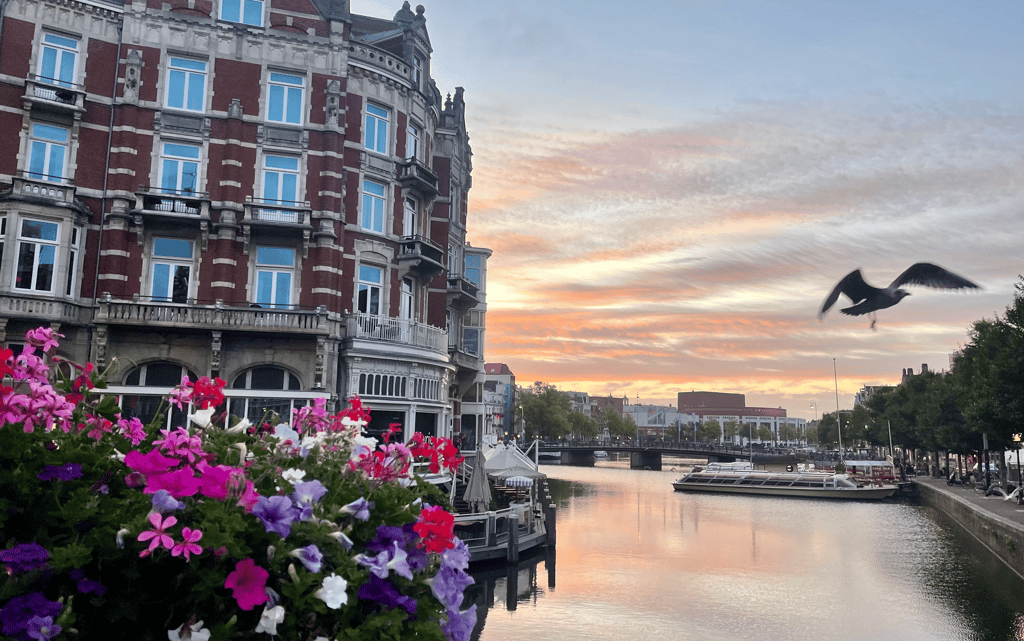
A Morning moment in Amsterdam, captured by Lamya Valter Schmidlin
LVS *AC
Cross-cultural Guest Experience Research & Consulting
contact
lamya@lvsacrosscultures.com
© 2026. LVS AC - All rights reserved.