
HR’s Strategic Role in Brand Cultural Translation
This article explores how recruitment goes beyond the mere acquisition of talent to become an act of cultural translation. Through the lens of individual and collective values, it highlights the role of employees as the brand’s first ambassadors, capable of embodying a global vision while respecting the cultural codes of each market.
INTERCULTURALHUMAN RESSOURCESTALENT EXPERIENCERETAILHOSPITALITY
Lamya Valter Schmidlin
2/1/20265 min read


The internationalisation of a brand is a major challenge for human resources, far beyond administrative considerations. It affects both the employee experience and the brand’s reach in a new market. How do you speak to local talent and attract them when their frame of reference is different, and when the brand does not evoke the same emotions as it does in its home market?
For a brand to truly endure, it must be able to create an emotional connection with its market. A brand is not the product. It is what that product evokes. It is the sum of positive associations linked to the final product, memories of moments, people, or places. It is this whole ecosystem, this connection, that leads a consumer to choose one product over another. And what guides these choices? The consumer’s values. Our values shape our purchasing behaviours. Values operate on two levels (micro and macro), both individual and cultural. When a brand expands internationally and is introduced into a new cultural context, its meaning can be reinterpreted and transformed. This creates complexities and dilemmas for teams responsible for the brand experience, both for customers and for employees. These teams must pay closer attention to local interpretations of meaning, which requires an understanding of the cultural and individual values that make the brand attractive.
Values are among the first things a child learns and internalises, often implicitly rather than consciously. Developmental psychologists generally agree that by the age of ten, most children have already established their core value system. They function like an autopilot. Without personal development work, the risk is these values remaining unconscious. As mentioned previously, we can look at two levels of values: individual and collective. Collective values are those shared by members of a group cultural values. Individual or micro-level values are the values of the individual. Cultural values therefore represent the characteristic priorities of a society, added to an individual’s personal value system.
In this context, recruitment becomes a strategic act of cultural translation. On the floor, the first local employees of an international brand are its first ambassadors. They are the voice, the gesture, the gaze, and sometimes even the silence, of the brand in this new market. They are the ones who give local meaning to global values. In luxury, retail, or hospitality, this reality is even more pronounced. The product may be identical, but the experience never is. It is the teams in-store, at reception, or in customer relations who embody the brand. They are the ones who “sell,” not only an object or a service, but an imaginary world. And for this, it is not enough for them to know the brand. They must understand it through their own cultural lens.
Recruiting local ambassadors therefore means, above all, recruiting profiles capable of integrating values while interpreting them accurately. This is where David Allison’s value-based marketing approach becomes particularly relevant.
The first step, the archetype, helps clarify what the brand seeks to embody on a human level in the field. A French luxury house positioned around the “Sage” or the “Creator” archetype will not recruit the same profiles as a more “Hero” or “Explorer” brand. More importantly, this archetype must be legible locally. A salesperson embodying formality and discretion may be perceived as elegant in Japan, but interpreted as distant or disengaged in markets such as Brazil or the United States, where expressiveness and relationship-building are central to the act of selling.
The second step, identifying individual values, then becomes a concrete recruitment tool. Which values must be non-negotiable in a brand ambassador? If we take the example of a French jewellery brand expanding into the Middle East, prestige and excellence are shared values, but the way they are expressed differs. The recruiter must identify talents capable of embodying the relational generosity expected locally, while respecting the codes of the house. This is not a question of technical skills, but of value compatibility.
Next comes the comparison of regional values.
It is at this stage that many brands encounter difficulties. Some recruit “market experts” who fail to translate the brand’s DNA locally. Others favour profiles that are overly “brand-driven,” able to represent the house’s universe faithfully, but disconnected from local cultural codes.
Once these elements have been identified, value thinking makes it possible to transform recruitment into a lever for the brand experience by understanding where and how to attract these talents, and how to continuously train them through this value-thinking system.
Recruiting local ambassadors is not about seeking clones of the home market. It is about finding interpreters: people capable of translating the brand’s values into an emotional language that local customers can understand. In luxury hospitality, for example, an employee does not need to replicate “French-style” service exactly. They need to understand what that service represents: attention, precision, mastery of detail and then express it in their own way, according to the cultural codes of their market. In this way, recruitment becomes an act of customer experience design.
Each local ambassador is a living point of contact between the brand and its new market. If they understand the values but cannot translate them, the brand remains foreign. If they translate without understanding, the brand becomes diluted. This is the core challenge: recruiting and training talents capable of recognising this “tension” and turning it into a strength. A brand never speaks directly to its customers. It is always its employees who speak on its behalf. Developing a brand internationally means accepting that meaning is never fixed. It means understanding that values are the invisible language that connects the brand to both its customers and its employees. And that HR, at the heart of this cultural translation, plays a key role: transforming a global brand into a locally relevant human experience.
The following book inspired me to write this article:
Allison, D. (2022). The Death of Demographics: Valuegraphic Marketing for a Values-Driven World. Lioncrest Publishing.
For more insights, example of concrete actions to take and talk about this topic, feel free to contact me at lamya@lvsacrosscultures.com or connect with me on LinkedIn here!
Thank you for reading,
Lamya
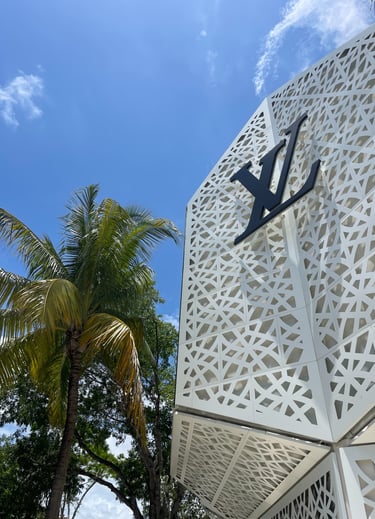
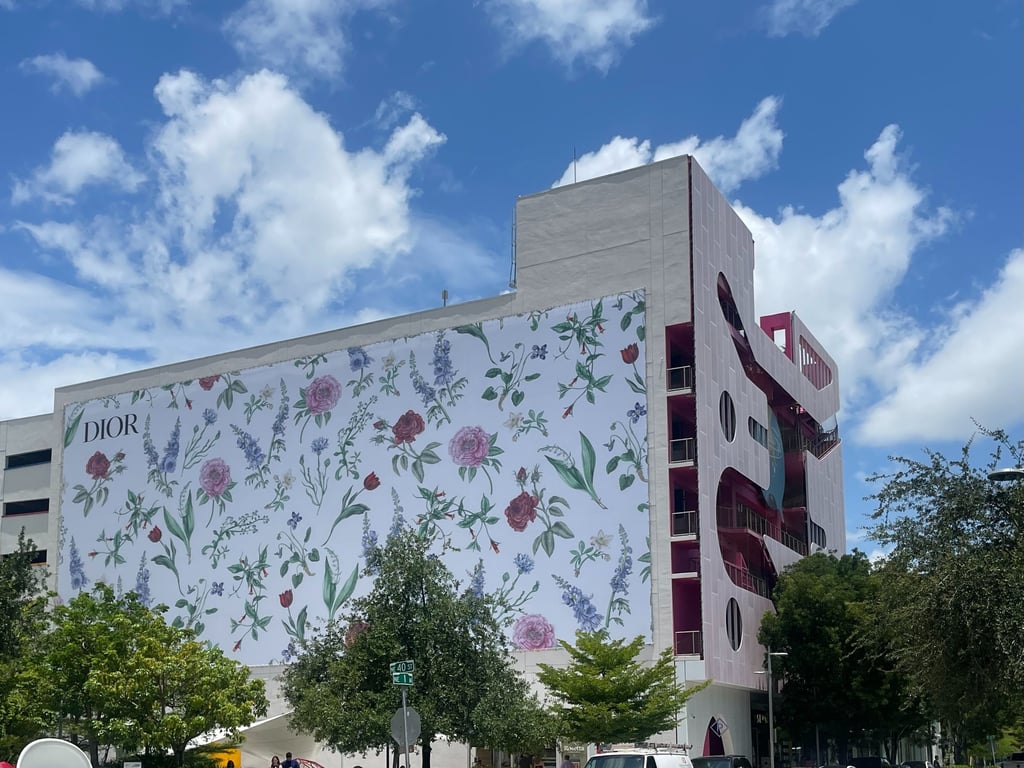
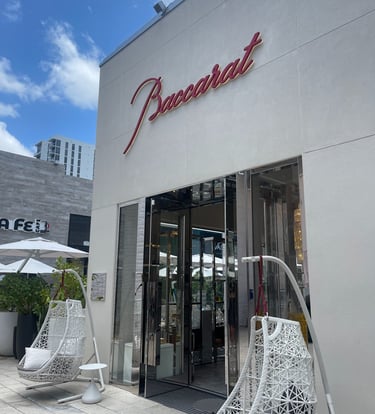
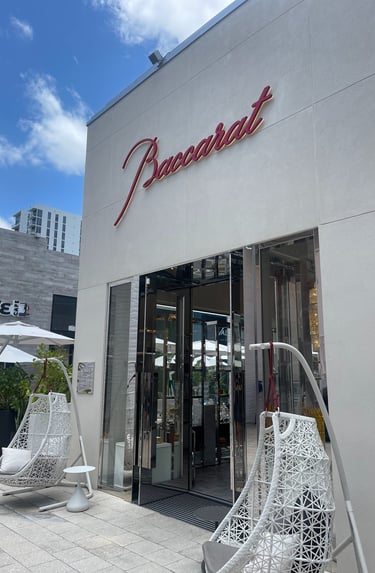


Iconic French Houses in Miami - Captured by Lamya Valter Schmidlin - Miami Design District
LVS *AC
Cross-cultural Guest Experience Research & Consulting
contact
lamya@lvsacrosscultures.com
© 2026. LVS AC - All rights reserved.