
The Country of Origin Effect as a Strategic Lever for Brand Equity in Hospitality - F&B
Among the different touchpoints that shape the guest journey, F&B has emerged as one of the most powerful experiential dimensions of a hotel offering. Culinary experiences mobilize several sensory and symbolic elements simultaneously such as taste, atmosphere, design, and human interaction making them effective vehicles for expressing brand identity and cultural narrative. One theoretical framework that offers valuable insight to dig deeper into this phenomenon is the Country of Origin Effect (COE). The COE describes how the perceived origin of a product, service, or brand influences consumers’ evaluation of its quality and desirability. This article looks its strategic implications for lifestyle hospitality. Happy reading!
HOSPITALITYCROSS-CULTURALGUEST EXPERIENCE
Lamya Valter Schmidlin
3/14/20267 min read
The "Country of Origin Effect" and consumer perception
The Country of Origin Effect refers to the influence that a product’s or brand’s national origin exerts on consumer perceptions and purchase decisions. According to Godey et al. (2012), the symbolic associations attached to a country can significantly shape the perceived quality and desirability of goods and services.
Academic research on the COE has developed along 2 main streams:
-> The Product-Country Image (PCI) and the mechanisms through which specific products become associated with particular countries. These associations are often rooted in historical expertise, cultural narratives, or long-standing traditions that link certain products to national identities: French gastronomy, Japanese craftsmanship, or Italian design, for instance.
-> The way consumers use country-related cues as signals of quality, especially when intrinsic product attributes are difficult to evaluate prior to consumption.
Signals associated with the COE can be either intrinsic or extrinsic (Peterson & Jolibert, 1995; Verlegh & Steenkamp, 1999). Intrinsic cues relate to the physical characteristics or craftsmanship of a product, while extrinsic cues include labels, brand names, or cultural symbols that evoke a national identity. Although consumers generally rely on intrinsic attributes when assessing quality, the COE becomes particularly influential when such attributes are difficult to evaluate directly (Johansson, 1989; Chattalas et al., 2008). In these situations -> country image functions as a heuristic that helps consumers interpret unfamiliar offerings.
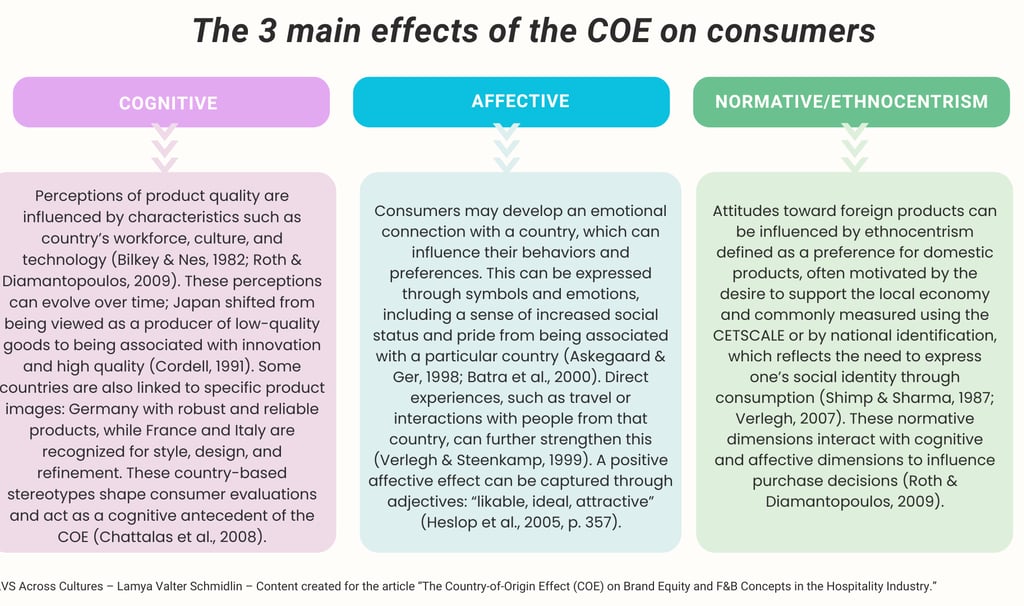
Schoonjans (2016) identifies 3 principal effects of the COE on consumer perception: it shapes perceived quality, reinforces brand associations, and influences purchase intentions.
Country image and brand equity
The interaction between the Country of Origin Effect and brand equity is particularly relevant in service industries such as hospitality, where experiences are intangible and perceptions play a central role. Keller defines brand equity as “the differential effect that brand knowledge has on consumer response to the marketing of that brand.” In practice, this means that the value of a brand lies in the associations and meanings it evokes in consumers’ minds. When a brand is linked to a country that enjoys a positive cultural image, this association can generate powerful secondary brand associations, strengthening perceived value and reinforcing brand equity (Godey et al., 2012).
Example 1: a Provençal hospitality brand expanding internationally
A luxury hotel brand rooted in Provence may leverage the positive image of southern France, associated with art de vivre, gastronomy, and elegance, when expanding abroad. Through architecture, design elements, scents, and service style inspired by the region, the brand recreates a sense of Provençal lifestyle. These cues reinforce perceptions of authenticity and refinement, strengthening brand equity in international markets.
Example 2: A Swiss watch maison opening a café concept
A Swiss luxury watch retailer launching an in-store café can benefit from Switzerland’s reputation for precision, craftsmanship, and quality. From the product to the service, these associations shape customer expectations: minimalist design, meticulous service, and carefully curated interactions reflecting the same values found in watchmaking. The country image extends beyond the core product category and contributes to reinforcing the brand’s overall prestige.
In hospitality, these associative processes are particularly influential and F&B has a major role to play!
F&B as a vehicle for the COE
Within hotels, Food & Beverage represents one of the most powerful ways to translate the Country of Origin Effect into both tangible and experiential value. Gastronomy activates several sensory dimensions simultaneously, transforming abstract cultural narratives into lived experiences. Through ingredients, culinary techniques, presentation, and storytelling, restaurant concepts can embody the cultural identity associated with a brand or destination.
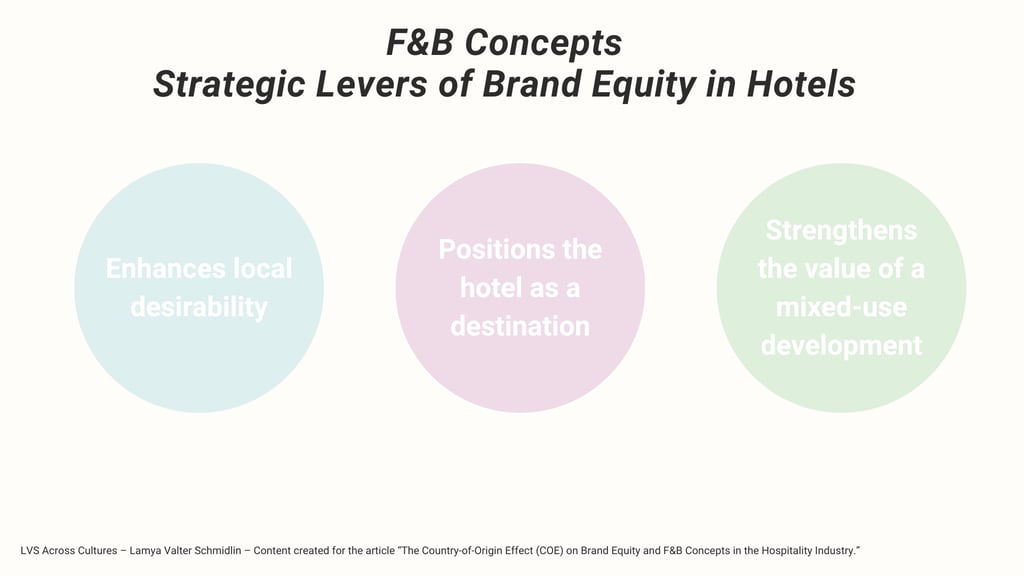
From a consumer perspective, this process reinforces the role of intrinsic cues. Culinary craftsmanship, ingredient quality, and culinary traditions provide tangible signals that support the associations generated by the COE (Peterson & Jolibert, 1995).
At the same time, extrinsic cues such as restaurant design, menu narratives, or service rituals contribute to shaping the symbolic meaning of the dining experience. When these elements align coherently, the restaurant becomes an experiential extension of the brand’s identity. Though, misalignment between the culinary concept and the perceived identity of the brand may create cognitive dissonance, weakening the credibility of the experience.
Strategic challenge: a concept that both attract travelers and local communities
The role of hotel restaurants has evolved significantly. Increasingly, lifestyle-oriented hotels aim to develop culinary concepts that attract both international travelers and local residents. This shift reflects 2 complementary dynamics:
-> Travelers increasingly seek authentic local experiences, particularly in gastronomy. Food has become a primary gateway through which visitors explore the culture of a destination.
-> From a business perspective, restaurants that attract local clientele often achieve stronger reputation and more stable economic performance. A restaurant embedded within the local culinary ecosystem benefits from greater visibility, credibility, and recurring demand.
However, this dual ambition creates a strategic tension. Travelers often seek local authenticity, while local residents may avoid restaurants perceived primarily as tourist-oriented or hotel-centric. Balancing these expectations requires careful alignment between brand identity and the destination context.
This challenge becomes even more complex when a brand rooted in a strong country identity expands internationally. For instance, to take the example previously cited, the restaurant concept inspired by the Provençal lifestyle may rely on symbols of southern French culture: ingredients, aesthetics, or a certain art de vivre. When developed abroad, translating these cultural references into a credible on-site experience requires more than design or menu adaptation. It also depends on how staff embody and communicate these values in service interactions, which may not always come naturally in a different cultural environment.
From the perspective of the COE, this challenge can be interpreted as the intersection between global brand identity and local cultural integration. While COE highlights the symbolic value of national origin, successful hospitality experiences increasingly emerge from the interaction between global brand narratives and local cultural expression.
Leveraging / Anchoring / Hybrid approaches
1. Leveraging the brand’s origin: amplifying the COE
In this case, the restaurant acts as a natural extension of the brand’s positioning. This strategy can be particularly effective when:
the brand’s country of origin holds strong cultural or gastronomic capital
customers seek a distinctive or status-oriented experience
the hotel aims to reinforce the coherence of its overall identity
2. Anchoring the concept in the destination: maximizing local appeal
In other contexts, markets may value local authenticity and cultural integration more strongly. In such cases, an F&B concept deeply rooted in the destination’s culinary culture may be more relevant for attracting local clientele and driving restaurant traffic. The restaurant then becomes a point of connection with the destination, contributing to the hotel’s integration within its urban or cultural environment.
This approach tends to work well when:
the destination has a strong gastronomic identity
the strategy aims to attract a regular local audience
the brand seeks to be perceived as locally engaged
Even with this approach, it remains essential to preserve coherence with the brand’s DNA to avoid dissonance between the hotel’s identity and the experience delivered.
3. The hybrid approach
In practice, many lifestyle hotels adopt a hybrid approach, combining international inspiration linked to the brand’s origin with local ingredients, techniques, or cultural influences. The F&B concept then becomes a meeting point between global brand identity and local culture, generating both differentiation and relevance. That is less risky but can also lack stronger identity that helps differentiate.
In all cases, success ultimately depends on experiential coherence: menus, design, storytelling, and service must consistently express the brand promise in order to maximize the impact on brand equity.
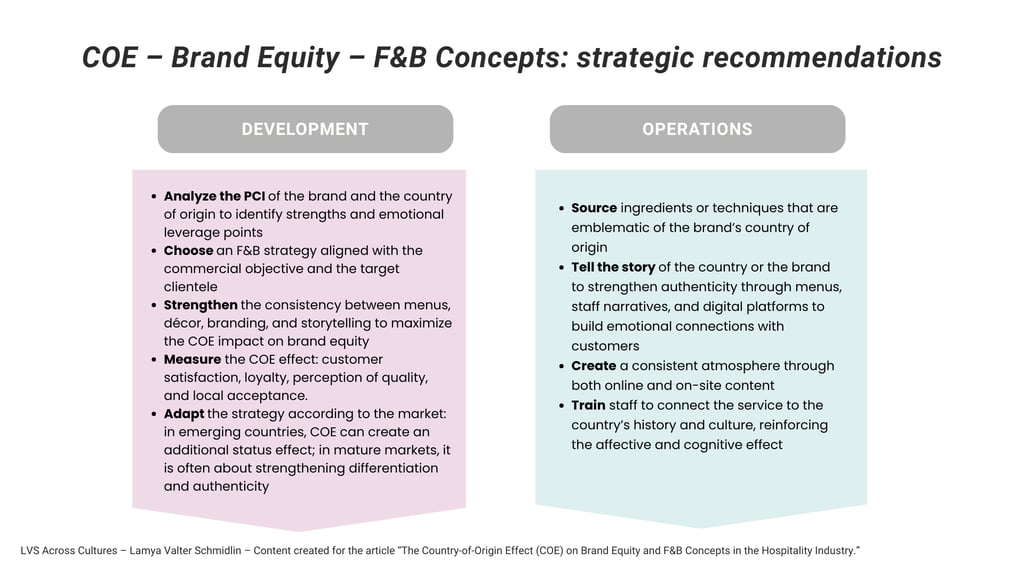
To sum up this long article (thank you for reading if you are still here!) -> The Country of Origin Effect (COE) extends beyond a mere indicator of quality for consumers and reveals itself as a strategic asset that can shape brand equity and differentiate the guest experience in lifestyle hospitality. By thoughtfully integrating the cultural and culinary cues associated with a brand’s origin, F&B concepts can translate abstract perceptions of authenticity, prestige, and heritage into concrete, memorable experiences that resonate emotionally with guests.
For developers / GMs, it requires understanding how COE interacts with brand positioning, local context, and experiential design so to translate it on the floor. When leveraged effectively, COE allows hotels to simultaneously reinforce their global identity and connect meaningfully with local communities, creating a dual impact on reputation, guest loyalty, and long-term commercial performance.
--
For more insights and talk about this topic, feel free to contact me at lamya@lvsacrosscultures.com or connect with me on LinkedIn here!
Thank you for reading,
Lamya
To write this article, I have consulted:
Schoonjans, G. (2016). L’influence du pays d’origine d’un produit sur la perception des consommateurs.
Zeugner-Roth, Katharina & Diamantopoulos, Adamantios. (2009). Advancing the country image construct. Journal of Business Research. 62. 726-740. 10.1016
Bilkey, Warren & Nes, Erik. (1982). Country-of-Origin Effects on Product Evaluations. Journal of International Business Studies. 13. 89-100. 10.1057
Cordell, V.V. (1991) Competitive Context and Price as Moderators of Country of Origin Preferences. Journal of the Academy of Marketing Science, 19, 123-128.
Chattalas, Michael. (2005). The effects of national stereotypes on country of origin-based product evaluations.
Godey, Bruno & Pederzoli, Daniele & Aiello, Gaetano & Donvito, Raffaele & Chan, Priscilla & Oh, Hyunjoo & Singh, Rahul & Skorobogatykh, Irina & Tsuchiya, Junji & Weitz, Bart. (2012). Brand and country-of-origin effect on consumers' decision to purchase luxury products. Journal of Business Research - J BUS RES. 65.
Peterson, Robert & Jolibert, Alain. (1995). A Meta-Analysis of Country-of-Origin Effects. Journal of International Business Studies. 26. 883-900. 10.1057
Shimp, T. A., & Sharma, S. (1987). Consumer ethnocentrism: Construction and validation of the CETSCALE. Journal of Marketing Research, 24(3), 280–289.
Verlegh, Peeter. (2007). Home country bias in product evaluation: The complementary roles of economic and socio-psychological motives. Journal of International Business Studies. 38. 361-373.
Maison Delano, Paris - France
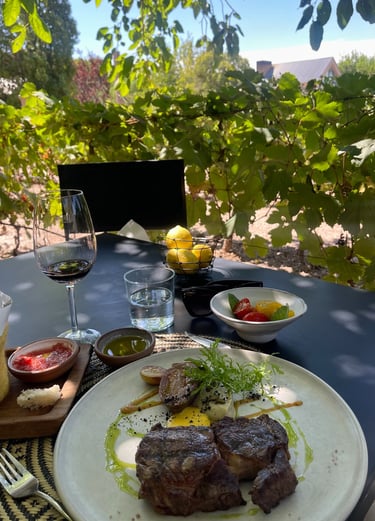
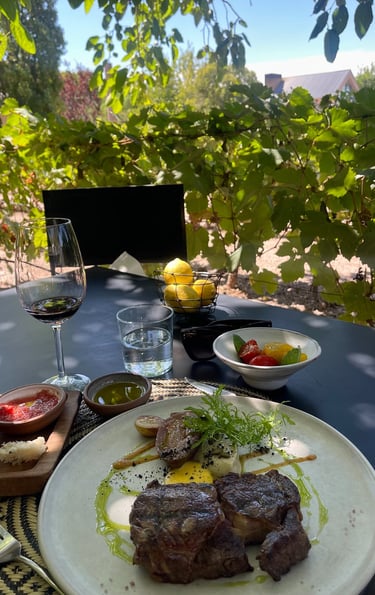
Fogón, Mendoza - Argentina
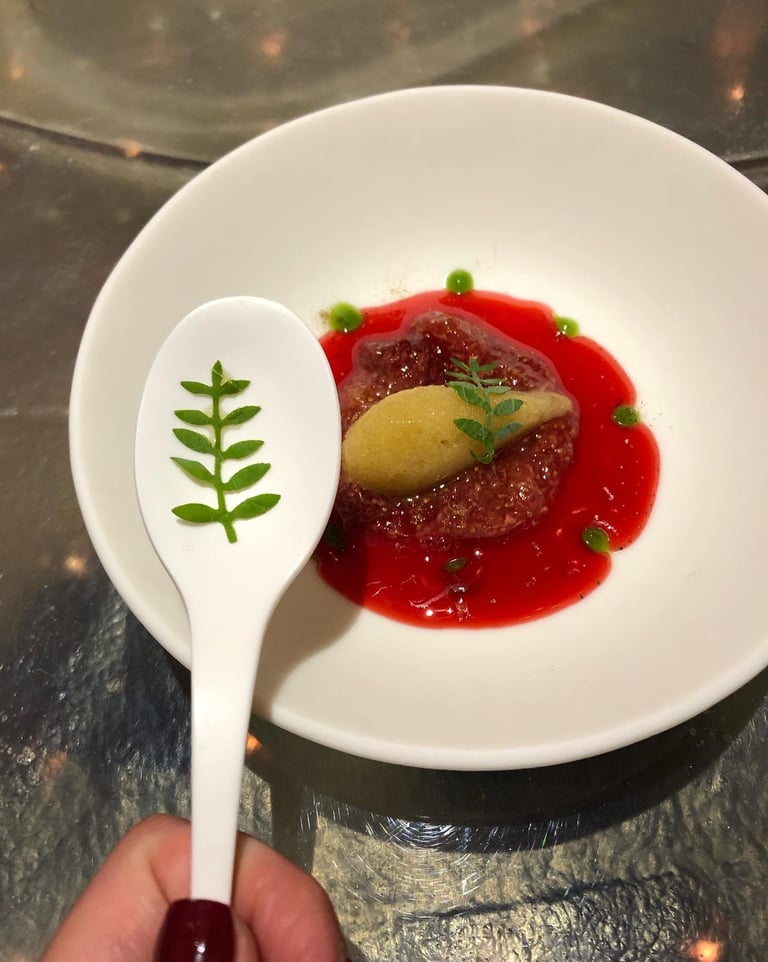
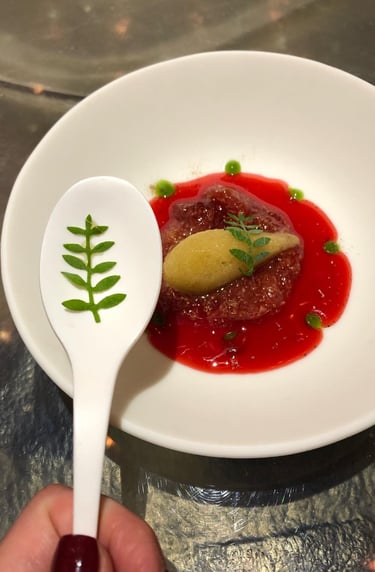
Enigma, Barcelona - Spain
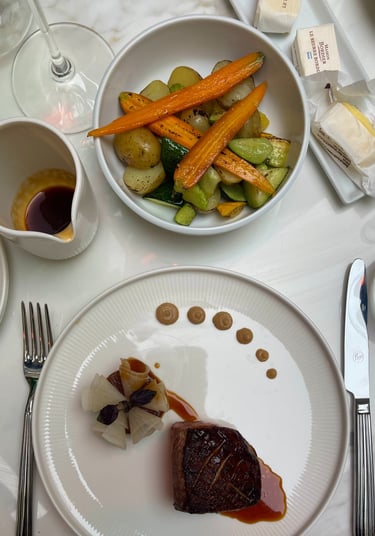
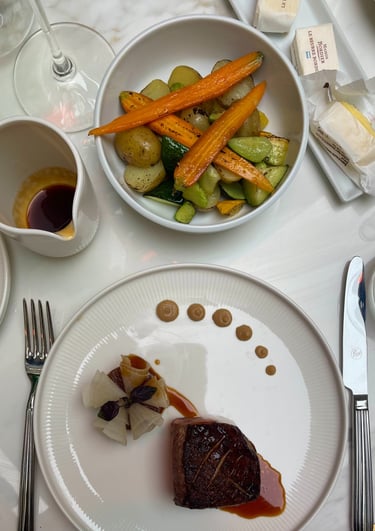
Culinary experiences captured (and savored) by Lamya Valter Schmidlin
LVS *AC
Cross-cultural Guest Experience Research & Consulting
contact
lamya@lvsacrosscultures.com
© 2026. LVS AC - All rights reserved.